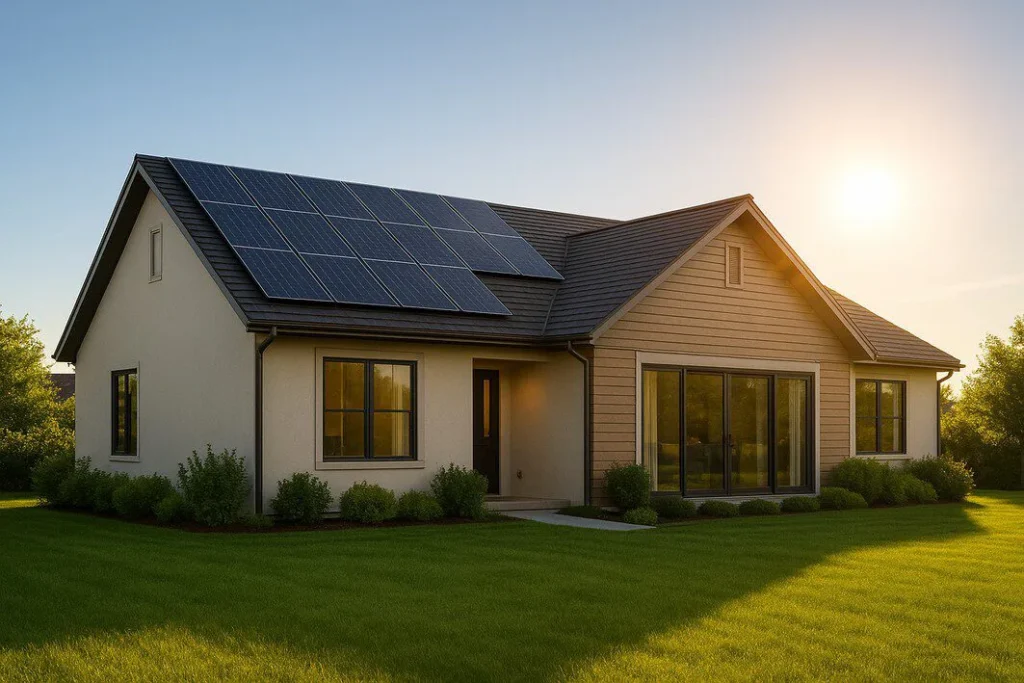
The dream of harnessing the sun’s power to slash your electricity bills is more accessible than ever. For many homeowners, the primary hurdle isn’t the desire for clean energy but the perceived high upfront cost. What if you could make the switch to solar without a significant initial investment? The good news is, you can. This guide will walk you through exactly how to pay for solar panels with no money down, exploring four proven methods that make residential solar an immediate financial win.
Table of Contents
Gone are the days when a five-figure check was the only way to get solar panels on your roof. The industry has evolved, creating flexible financing routes designed to eliminate the initial cost barrier. These no cost solar programs allow you to start saving on your energy bills from day one, paying for your system over time with the money you’re no longer sending to the utility company.
Why “No Money Down” is a Game-Changer for Homeowners
Opting for a zero-down solar solution fundamentally changes the financial equation of going solar. Instead of waiting years to break even on a large investment, you can achieve immediate cash flow benefits.
- Instant Savings: Your new, lower monthly solar payment can be less than your current average electricity bill, meaning you save money from the very first month.
- Budget-Friendly: It replaces a large, prohibitive capital expense with a predictable, manageable monthly payment.
- Increased Home Value: Solar panels are a proven way to increase your property’s value, and with a $0-down option, you get this benefit without tapping into your savings.
Method 1: The Solar Loan
A solar loan is one of the most popular ways to finance a residential solar system. It functions just like a car loan or home improvement loan: a financial institution lends you the money to purchase the system outright, and you pay it back in monthly installments over a set term (typically 10-25 years). Many specialized solar lenders offer $0-down loan options specifically for this purpose.
Key Benefit: You own the system from day one. This means you are eligible for all federal, state, and local tax credits, rebates, and incentives, which can significantly reduce the total cost of your system.
What About Interest-Free Solar Panel Loans?
You may see offers for interest free solar panel loans, and it’s wise to approach them with a clear understanding. While some promotional offers might exist for a short introductory period, a truly “interest-free” loan is rare. Often, the financing costs are incorporated into the total price of the system, making it appear interest-free. Always compare the total cash price of a system to the total cost of a financed system to see the true cost of borrowing.
Pros of a Solar Loan:
- Full ownership of the solar panel system.
- You receive the 30% federal solar tax credit and other local incentives.
- Can increase your home’s equity.
Cons of a Solar Loan:
- You are responsible for all system maintenance and repairs after the warranty period.
- It is a debt that will appear on your credit report.
- Monthly payments are required regardless of system performance.
Method 2: The Solar Lease
A solar lease is like renting the solar panel system. A solar company installs the panels on your roof at no upfront cost, and you pay a fixed monthly fee to use the system for the duration of the lease term (usually 20-25 years). The solar company retains ownership of the equipment.
This is a straightforward way to get solar panels with no money down. You get the benefit of solar energy—a lower electricity bill—without the responsibilities of ownership.
Pros of a Solar Lease:
- $0 upfront cost and a predictable, fixed monthly payment.
- The solar company is responsible for all maintenance, repairs, and performance monitoring.
- It’s a simple way to lock in a low energy rate.
Cons of a Solar Lease:
- You do not own the system and are not eligible for any tax credits or incentives.
- Lease payments may increase over time due to an “escalator clause.”
- Selling your home can be complicated, as the new owner must qualify for and assume the lease.
Method 3: The Power Purchase Agreement (PPA)
A Power Purchase Agreement (PPA) is another popular option within no cost solar programs. It’s similar to a lease in that a developer installs and owns the solar panels on your roof for free. However, instead of paying a fixed monthly rent for the equipment, you agree to purchase the electricity the system generates at a set price per kilowatt-hour (kWh).
This price is typically lower than the utility’s rate, so you save money. You only pay for the power the system actually produces.
Pros of a PPA:
- No upfront investment and no maintenance responsibilities.
- You only pay for the power your system generates.
- The developer is incentivized to ensure the system is always performing optimally.
Cons of a PPA:
- You don’t own the system and don’t get the tax benefits.
- Your monthly payments can fluctuate based on solar production (e.g., lower in winter).
- PPAs often include an annual rate escalator, so your cost per kWh will increase over time.
Method 4: Government-Backed Programs (PACE)
Property Assessed Clean Energy (PACE) financing is a unique option available in some states (like California, Florida, and Missouri). PACE allows homeowners to finance energy efficiency upgrades, including solar panels, with no money down.
The financing is paid back over time through a special assessment added to your annual property tax bill. Because the loan is secured by the property itself, qualification is based on home equity rather than your credit score, making it accessible to more people.
Pros of PACE:
- Often has no upfront cost.
- Qualification is not primarily based on credit score.
- The debt is tied to the property, not the individual.
Cons of PACE:
- Only available in specific geographic areas.
- It places a senior lien on your property, which can make it difficult to sell or refinance your home.
- Interest rates can sometimes be higher than traditional solar loans.
How to Choose the Right Zero-Down Option for You
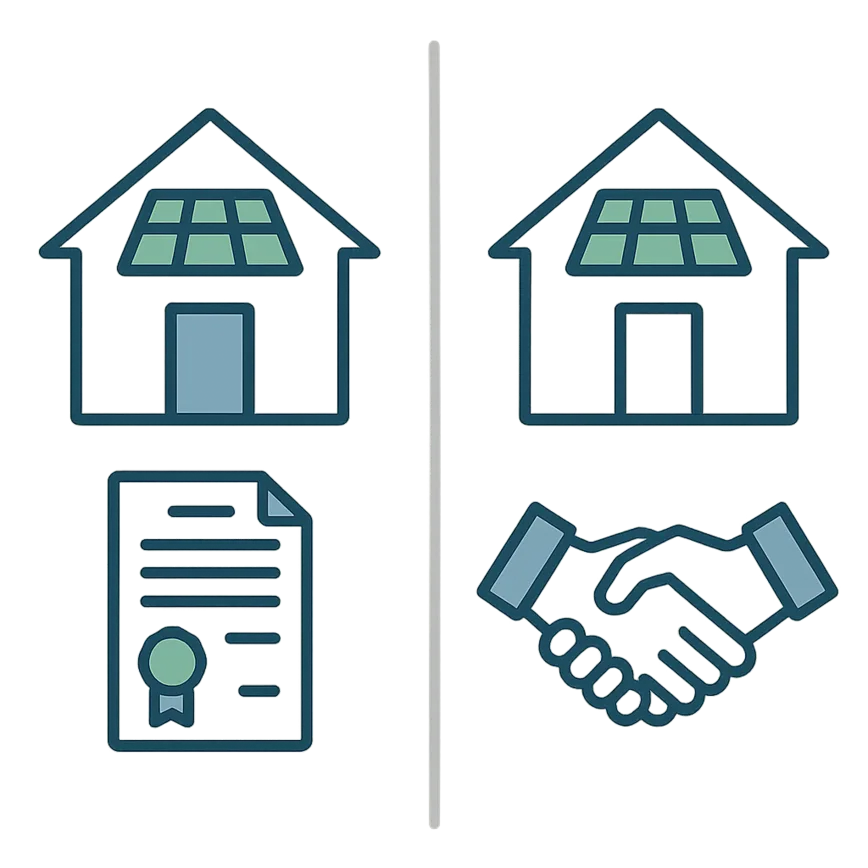
Deciding which path to take depends entirely on your financial goals and personal preferences.
- Choose a Solar Loan if: You want to maximize your financial return, own your system, and take advantage of valuable tax credits.
- Choose a Solar Lease if: You want the lowest-risk, hassle-free option with predictable payments and no maintenance worries.
- Choose a PPA if: You like the idea of paying only for the power you produce and want the provider to be fully responsible for system performance.
- Choose PACE if: It’s available in your area and you prefer to tie payments to your property taxes rather than taking on a traditional loan.
Making the right choice requires careful consideration. That’s why at RenewGenius, we’ve built a comprehensive solar knowledge base to empower you. By using resources like our ROI calculator, you can model how each of these financing methods impacts your long-term savings. To get a complete picture of your choices, we recommend you explore all your solar financing options in detail.
Your Solar Future Starts Now
The barrier of high upfront costs has been removed. Whether through a loan, lease, PPA, or PACE program, there is a viable path for nearly every homeowner to switch to clean, affordable solar energy. By understanding these four methods for how to pay for solar panels with no money down, you can confidently take the next step.
RenewGenius is here to guide you through every aspect of your journey to solar. Our focus on residential solar solutions means we provide the clear, expert insights you need to make a decision that benefits your wallet and the planet for years to come.