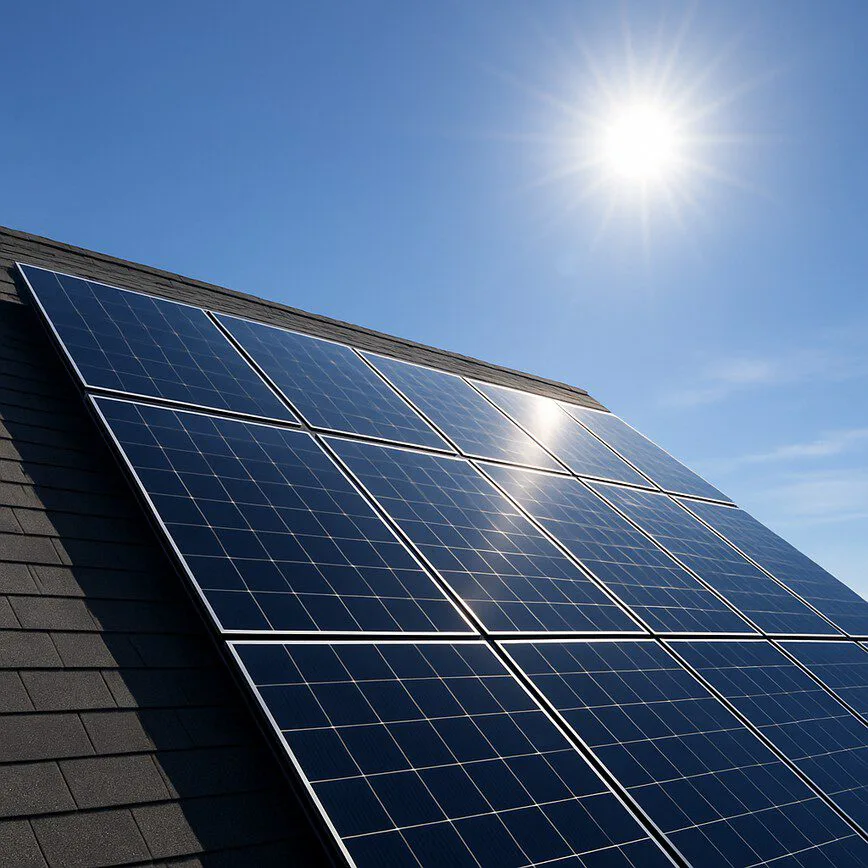
When you start exploring residential solar, “efficiency” is one of the first terms you’ll encounter. It sounds important—and it is—but what does it actually mean for your home, your energy production, and your wallet? Many homeowners feel that understanding this metric is key, but they’re often left wondering how it connects to the real-world price tag.
Table of Contents
- How is Solar Panel Efficiency Calculated? The Simple Breakdown
- What Factors Influence Real-World Efficiency?
- The Solar Panel Cost Guide: Connecting Efficiency to Price
- Breaking Down a Typical Solar Equipment Price List
- Getting an Accurate Solar Panel Quote: What to Look For
- Your Path to an Efficient Solar Home
At RenewGenius, our goal is to empower you with a comprehensive solar knowledge base, cutting through the jargon to give you clear, actionable insights. This guide will demystify solar panel efficiency, explaining exactly how it’s calculated and, more importantly, how it relates to the overall cost of your system. Let’s dive in.
How is Solar Panel Efficiency Calculated? The Simple Breakdown
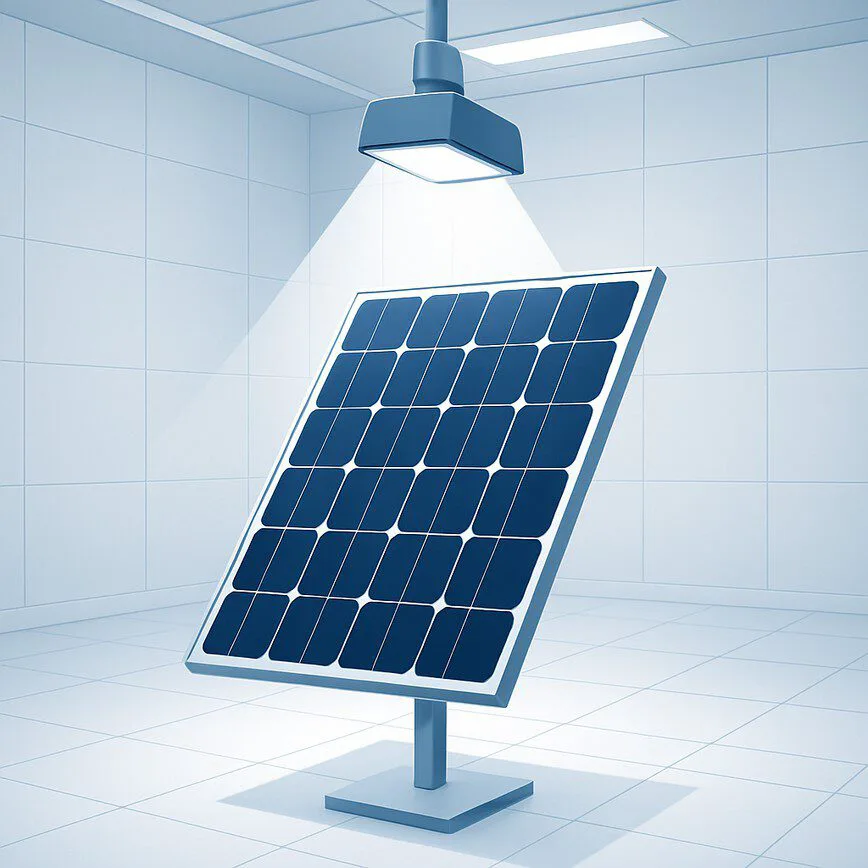
At its core, solar panel efficiency is a measurement of how well a panel converts sunlight into usable electrical energy. This percentage isn’t arbitrary; it’s determined under specific, controlled lab conditions known as Standard Test Conditions (STC).
STC creates a universal baseline for comparing different panels, involving:
- Cell Temperature: 25°C (77°F)
- Solar Irradiance: 1,000 watts per square meter (simulating a bright, sunny day)
- Air Mass: 1.5 (simulating the angle of the sun through the atmosphere)
The formula looks complex, but the idea is simple: it’s the panel’s maximum power output divided by the amount of solar energy hitting it. A panel with 20% efficiency converts 20% of the sunlight that strikes its surface into electricity under these ideal lab conditions.
A higher efficiency rating means the panel can generate more power in a smaller amount of space. This is especially valuable for homes with limited roof area.
What Factors Influence Real-World Efficiency?
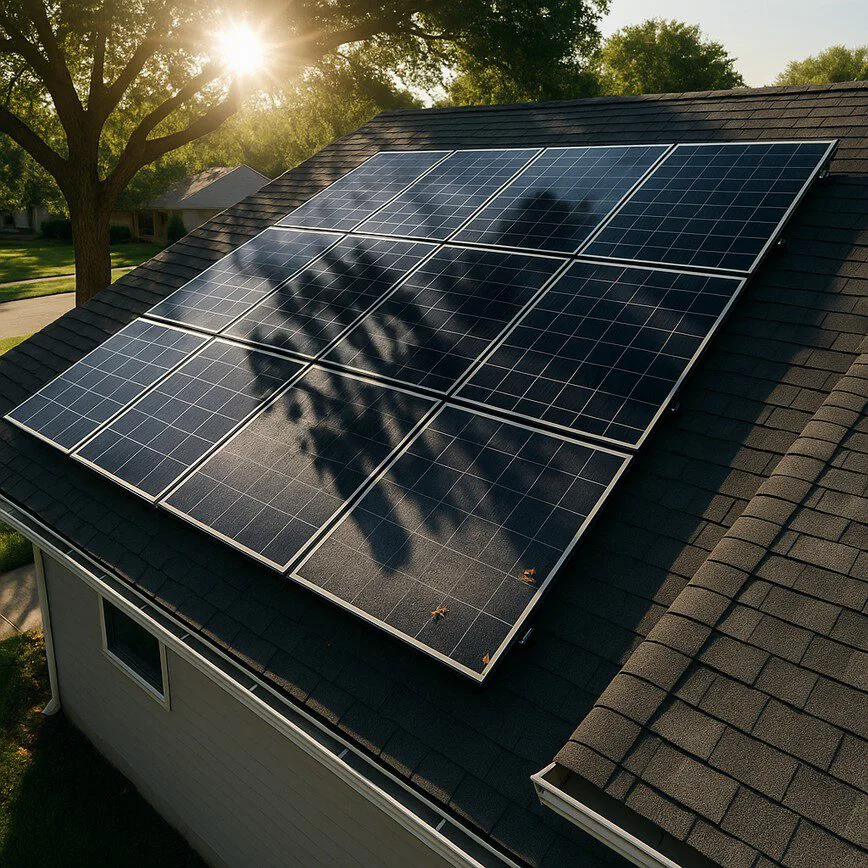
While STC is great for comparing panels on paper, your roof isn’t a laboratory. Several real-world factors will influence how your panels actually perform day-to-day.
Temperature
Ironically, solar panels become slightly less efficient as they get hotter. The STC benchmark is 77°F, but a dark rooftop on a sunny day can get much warmer, which can modestly reduce power output. Panels with a better temperature coefficient (a spec you can find on the datasheet) perform better in high heat.
Shading and Debris
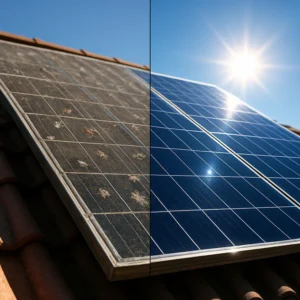
Even partial shading from a tree branch, chimney, or neighboring building can significantly impact your system’s output. The same goes for layers of dust, pollen, or snow. Consistent, unobstructed sunlight is the key to maximizing energy production.
Panel Angle and Orientation
The direction your roof faces (orientation) and its slope (angle) play a massive role. In the Northern Hemisphere, a south-facing roof is ideal for capturing the most sun throughout the day. Professional installers will position your panels to optimize this exposure based on your specific location.
The Quality of Your Solar Equipment
A solar panel doesn’t work in isolation. The efficiency of your entire system depends on all its parts working together seamlessly. The inverter, which converts the DC electricity from your panels into the AC electricity your home uses, is a critical component. Likewise, the performance of a solar battery, if you choose to install one, affects how much of your generated power you can store and use. Understanding how essential components like batteries and inverters contribute to overall performance is crucial for designing a truly efficient system.
The Solar Panel Cost Guide: Connecting Efficiency to Price
This brings us to the big question: Does a higher-efficiency panel always cost more? Generally, yes. This is a key takeaway for any solar panel cost guide.
Panels with higher efficiency ratings (e.g., 21% or higher) are typically built with more advanced monocrystalline cells and cutting-edge technology. This superior engineering and manufacturing process results in a higher price per panel.
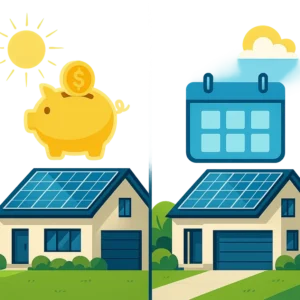
However, the upfront cost isn’t the whole story. For homes with limited roof space, investing in higher-efficiency panels can be the most cost-effective solution in the long run, as it allows you to generate the maximum amount of power possible from the area you have.
Breaking Down a Typical Solar Equipment Price List
When you receive a quote, you’ll see it’s more than just the cost of the panels. A complete solar equipment price list includes several key items that contribute to the final price:
- The Panels Themselves: This is the primary hardware cost, often priced per watt. Higher efficiency usually means a higher cost per watt.
- Inverters: The system’s “brain.” You’ll have options like string inverters or microinverters, each with different costs and benefits.
- Racking and Mounting Hardware: This is the durable framework that safely secures the panels to your roof.
- Installation Labor: The cost for a certified, professional team to design the system and install it correctly and safely.
- Permitting and Inspection Fees: These are administrative costs required by your local municipality to ensure your system is code-compliant.
Getting an Accurate Solar Panel Quote: What to Look For
A simple price list won’t tell you everything. A truly valuable solar panel quote is a comprehensive proposal tailored to your unique situation. It should be based on a thorough assessment of your home’s energy consumption, roof condition, and solar potential.
This is where focusing on long-term value over short-term cost becomes critical. At RenewGenius, we believe in helping homeowners make confident decisions. By using tools like an ROI calculator, you can move beyond the initial price and see how your investment will pay off over time through energy savings. A good quote should provide this level of transparency, helping you understand the financial benefits for your specific residential solar solution.
Your Path to an Efficient Solar Home
Understanding how solar panel efficiency is calculated is the first step. Connecting that metric to real-world performance and the total system cost is how you make a smart, informed decision for your home. Efficiency is more than a number on a spec sheet—it’s a crucial piece of the puzzle that determines your system’s power, price, and long-term value.
As you continue your journey, remember to look at the complete picture: panel quality, supporting equipment, and professional installation. This holistic approach ensures you get a system that’s not just efficient on paper, but powerful and reliable on your roof for decades to come.