When considering a switch to solar energy for your home, you’ll encounter a lot of technical terms. But few are as critical to your long-term success and savings as solar panel efficiency. Understanding what this metric means is the first step toward making a confident investment in your home’s energy future. This guide will demystify efficiency ratings, explore the average solar panel efficiency you can expect in 2025, and help you determine what level of performance is right for you.
Table of Contents
- What Is Solar Panel Efficiency and Why Does It Matter?
- What Is the Average Solar Panel Efficiency in 2025?
- What Is a Good Solar Panel Efficiency Rating?
- Key Factors That Influence Solar Panel Efficiency
- High Efficiency Solar Panels: Are They Worth the Investment?
- Understanding Solar Panel Efficiency Over Time: Degradation Explained
- Making an Informed Decision for Your Home
At RenewGenius, our mission is to empower homeowners with clear, actionable information. We believe that a well-informed decision is the best decision, which is why our comprehensive solar knowledge base is designed to guide you through every step of the process, starting with core concepts like this one.
What Is Solar Panel Efficiency and Why Does It Matter?
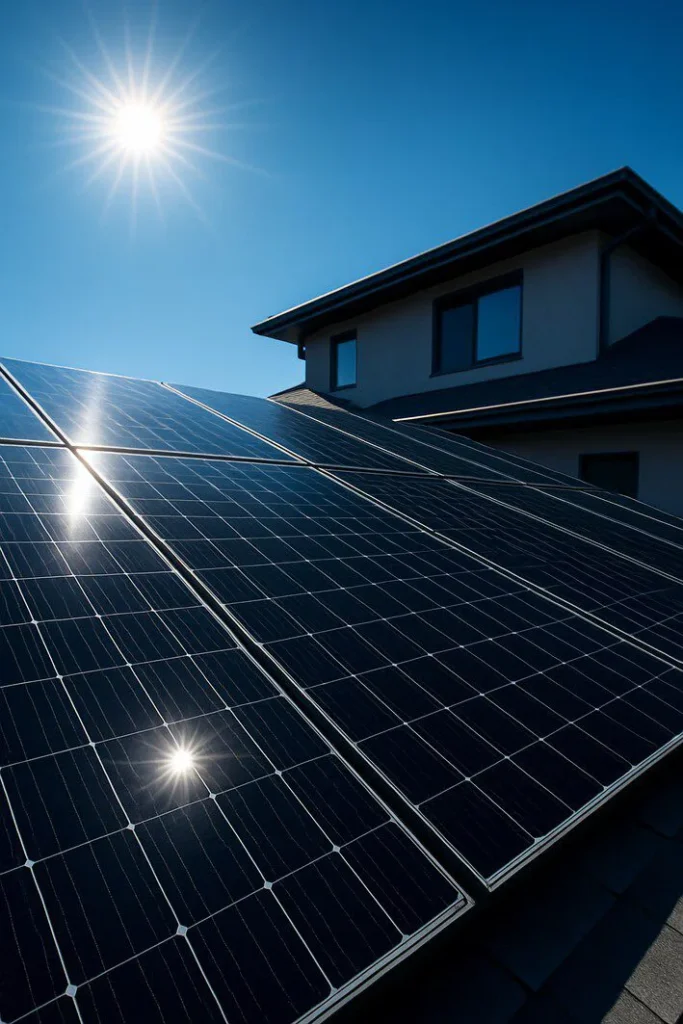
In simple terms, solar panel efficiency is a measurement of how much sunlight hitting a panel’s surface is converted into usable electricity. If a solar panel has a 20% efficiency rating, it means that 20% of the solar energy it absorbs is transformed into electrical power for your home.
But why is this number so important for homeowners?
- Power Output: Higher efficiency means more electricity generation from a smaller surface area. If you have limited roof space, high-efficiency panels can maximize your power output.
- Fewer Panels Needed: Because more efficient panels generate more power each, you may need fewer of them to meet your energy goals. This can impact the total system cost and installation complexity.
- Long-Term Value: A more efficient system can generate more savings on your electricity bills over its lifespan, leading to a faster and more substantial return on investment.
For a deeper dive into the basics, you can explore the fundamental definition of solar panel efficiency and the factors that influence it.
What Is the Average Solar Panel Efficiency in 2025?
The solar industry is constantly innovating, and efficiency ratings are always on the rise. As of 2025, the average solar panel efficiency for a quality residential installation falls between 19% and 23%.
While you might find budget panels with ratings closer to 17%, the majority of modern monocrystalline panels—the standard for residential solar—comfortably sit within this higher range. This represents a significant leap from just a decade ago, making solar a more viable and powerful option for homeowners than ever before.
What Is a Good Solar Panel Efficiency Rating?
This is one of the most common questions we hear, and the answer is: it depends on your specific needs. While a higher number is technically “better,” the “best” choice for you balances performance, budget, and available space.
Here’s a general breakdown of what is a good solar panel efficiency rating:
- Standard Efficiency (17-19%): These panels are often more budget-friendly and are a great choice for homeowners with ample, unobstructed roof space where maximizing output per square foot isn’t the primary concern.
- High Efficiency (20-23%): This is the sweet spot for most residential solar solutions. These panels offer excellent performance without the premium price tag of top-tier models. They are ideal for homes with moderate roof space or higher energy needs.
- Premium High-Efficiency (23%+): These are the most advanced panels on the market. They are perfect for homes with very limited or partially shaded roof space, or for homeowners who want to generate the absolute maximum amount of power possible.
Key Factors That Influence Solar Panel Efficiency
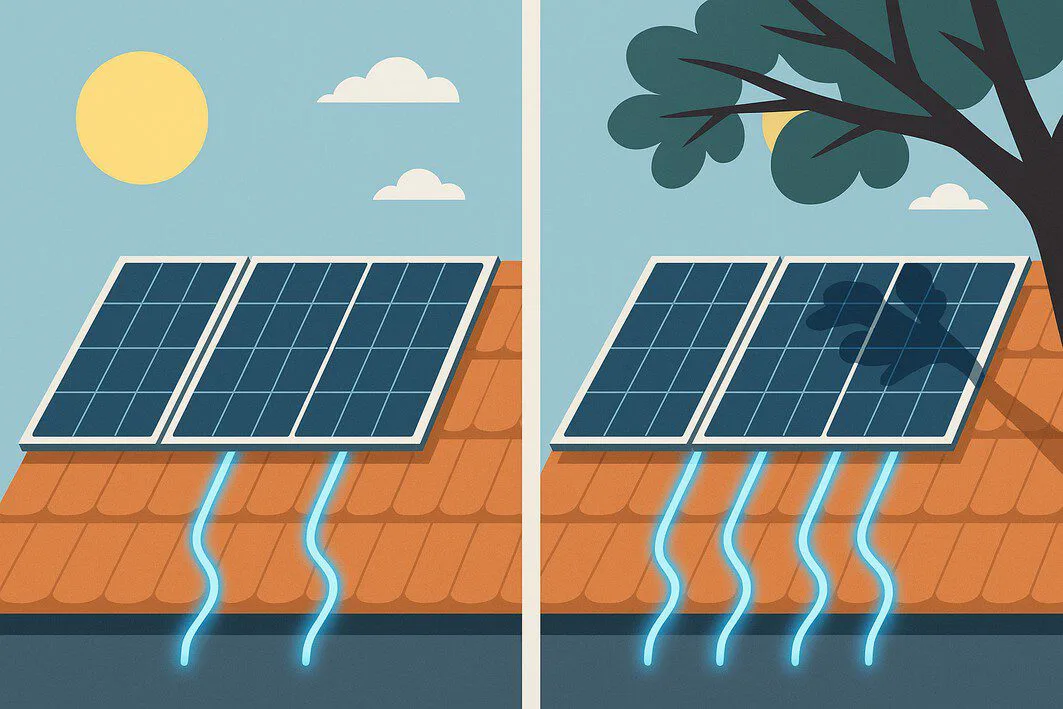
A panel’s factory rating is just the starting point. Real-world efficiency is influenced by several environmental and situational factors, including:
- Material and Type: The most common types of panels for homes are monocrystalline and polycrystalline. Monocrystalline panels, made from a single crystal structure, are generally more efficient and perform better in high heat and low light, making them the preferred choice for residential installations.
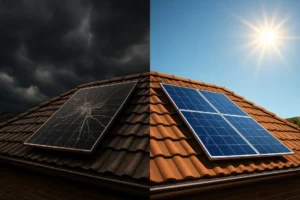
- Temperature and Environmental Conditions: Ironically, solar panels become slightly less efficient as they get hotter. The efficiency rating you see is measured under standard test conditions (STC) of 25°C (77°F). On a very hot roof, performance may dip slightly. Likewise, cloudy days will reduce output compared to bright, sunny ones.
- Shading and Obstructions: Even a small amount of shade from a tree branch, chimney, or neighboring building can significantly reduce the output of an entire string of panels. A professional site assessment is crucial to plan an installation that minimizes shading.
- Panel Angle and Orientation: For optimal year-round production in the Northern Hemisphere, solar panels should ideally face true south. The tilt angle should roughly match your home’s latitude. However, east- or west-facing panels can still be highly effective, especially for capturing morning or afternoon sun when household energy use is high.
High Efficiency Solar Panels: Are They Worth the Investment?
Opting for high efficiency solar panels often means a higher upfront cost. So, is the extra investment justified? For many homeowners, the answer is yes.
Consider these scenarios:
- Limited Roof Space: If you can only fit 15 panels on your roof, using 22% efficiency panels instead of 18% ones will generate significantly more power, making your investment much more productive.
- Future Energy Needs: Are you planning to buy an electric vehicle (EV) or install a heat pump in the future? Higher efficiency panels provide a buffer, ensuring you have enough power for tomorrow’s needs.
- Aesthetics: Fewer panels can create a sleeker, more minimalist look on your roof.
The best way to determine if the cost is worth it is to calculate the long-term return. RenewGenius offers an ROI calculator to empower your decision-making, allowing you to compare the lifetime savings of different system configurations.
Understanding Solar Panel Efficiency Over Time: Degradation Explained
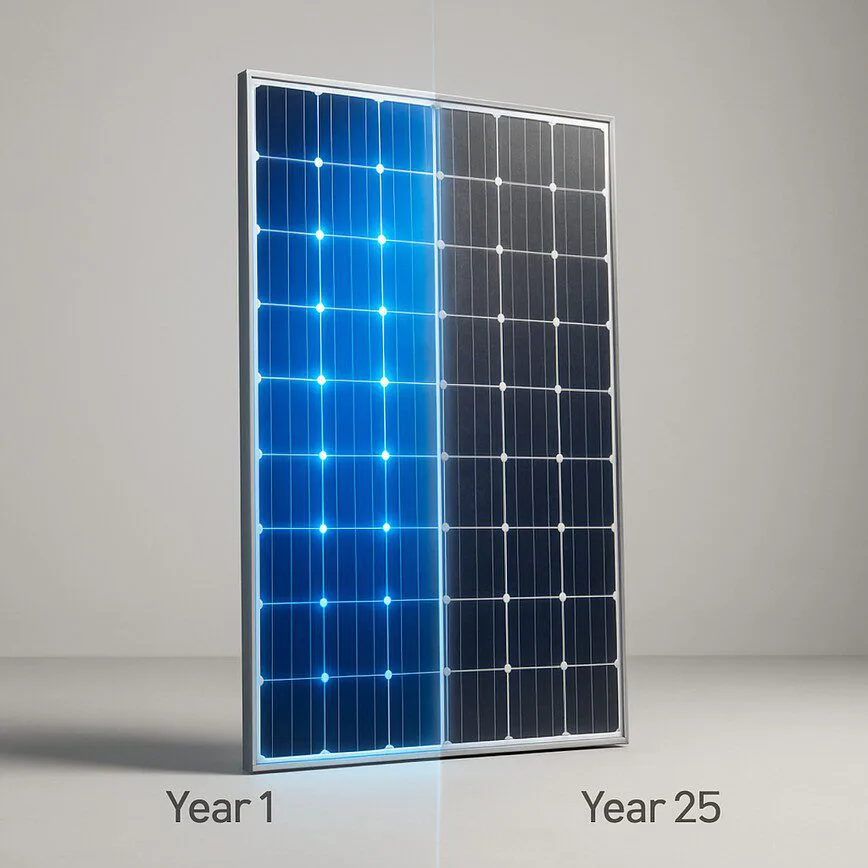
An important but often overlooked topic is solar panel efficiency over time. All solar panels experience a slow, predictable decline in performance known as degradation.
A quality solar panel typically has a degradation rate of about 0.5% per year. This means that after 20 years, the panel should still be operating at around 90% of its original output. Reputable manufacturers back this up with a performance warranty, typically guaranteeing 85-90% production after 25 years. This ensures your system remains a reliable and powerful asset for decades.
Making an Informed Decision for Your Home
Choosing the right solar panels is about finding the perfect intersection of performance, price, and your personal energy goals. While the average solar panel efficiency provides a great benchmark, your ideal solution will be unique to your home.
By understanding the factors that drive efficiency—from panel type to long-term degradation—you can work with a trusted installer to design a system that delivers clean energy and financial savings for years to come.
Ready to explore what solar can do for you? Dive deeper into our comprehensive solar knowledge base or use our tools to start planning your residential solar solution today.