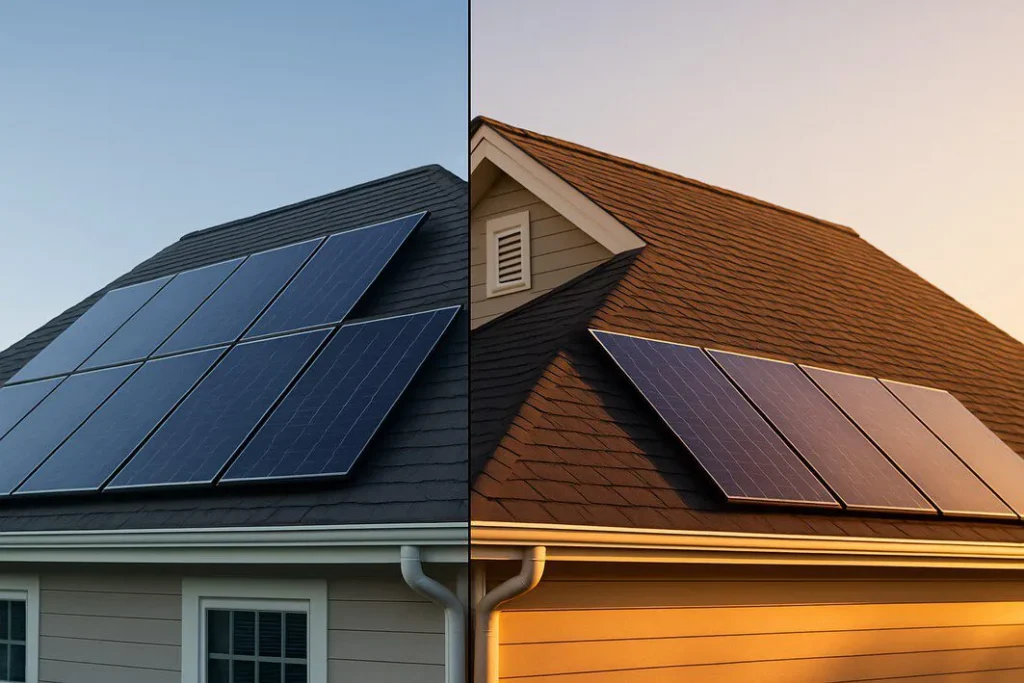
For homeowners considering a switch to solar, one common question is about timing: is morning sun or afternoon sun better for solar panels? It’s a logical query. You want to ensure your investment is positioned to capture the most energy possible. While the answer might seem complex, understanding a few key principles can clear things up.
Table of Contents
- Understanding the Solar Panel Power Generation Curve
- The Case for Morning Sun: Cooler and Clearer
- The Case for Afternoon Sun: Peak Demand and Higher Temperatures
- So, Is Morning Sun or Afternoon Sun Better for Solar Panels?
- Maximizing Your Solar Panel Efficiency by Time of Day
- Making an Informed Decision with RenewGenius
The truth is, solar panels generate power whenever the sun is out, but not all sunlight is created equal. The time of day, weather, and even temperature play a significant role in your system’s output. At RenewGenius, our goal is to provide a comprehensive solar knowledge base to help you navigate these details and make a confident decision for your home. Let’s break down the solar day to see when your panels are working their hardest.
Understanding the Solar Panel Power Generation Curve
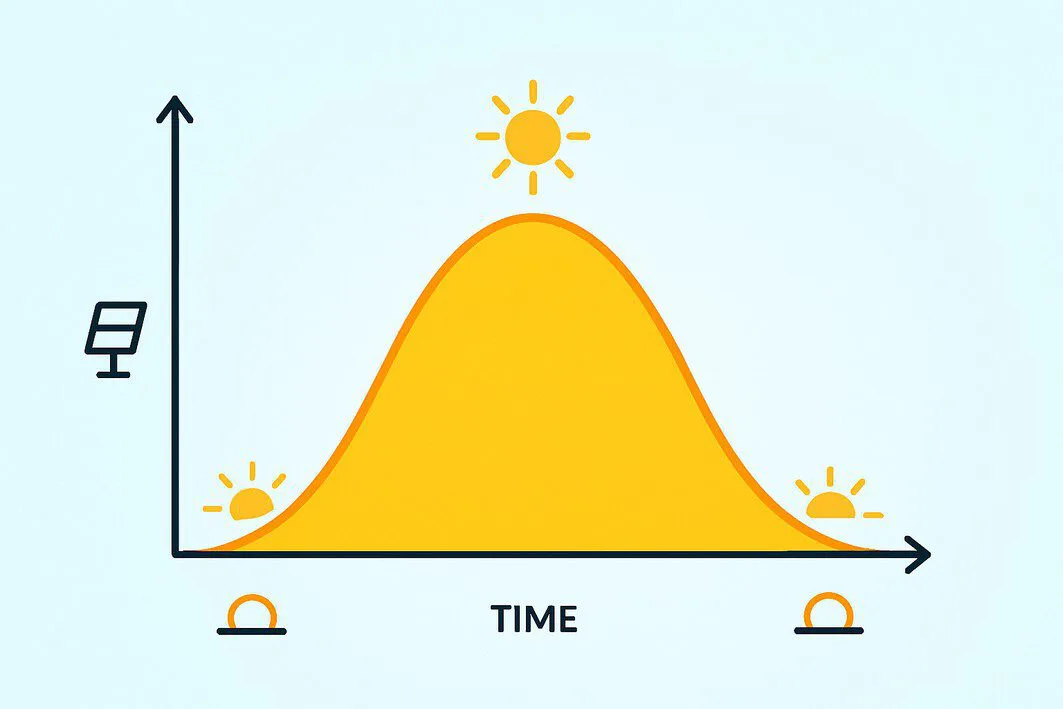
To visualize your system’s daily output, imagine a bell curve. This is the typical solar panel power generation curve. Production starts low at sunrise, climbs steadily to a peak around solar noon (when the sun is highest in the sky), and then gradually declines until sunset.
Therefore, the simple answer for the best time of day for solar panels is midday, typically between 11 a.m. and 3 p.m. During these hours, the sun’s rays are at their most direct, delivering a concentrated dose of energy to your panels. However, the debate between morning and afternoon sun involves important nuances related to temperature and efficiency.
The Case for Morning Sun: Cooler and Clearer
Morning sunlight, from sunrise to around 11 a.m., has a distinct advantage: cooler temperatures. Solar panels, like most electronics, operate more efficiently in cooler conditions. For every degree above their optimal operating temperature (usually around 77°F or 25°C), their efficiency can slightly decrease.
Because morning air is cooler, your panels can convert sunlight into electricity more effectively, even if the light isn’t at its peak intensity. Additionally, mornings often have clearer skies with less atmospheric haze or cloud buildup, allowing more direct sunlight to reach your roof.
The Case for Afternoon Sun: Peak Demand and Higher Temperatures
Afternoon sun, from roughly 2 p.m. to sunset, is powerful and intense. While this period contributes significantly to your overall energy generation, it comes with a trade-off: heat. Ambient temperatures are at their highest in the afternoon, which can slightly reduce the overall solar panel efficiency by time of day.
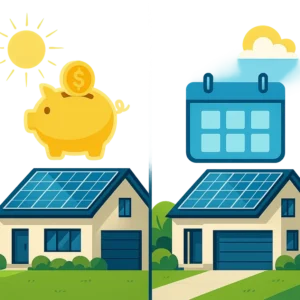
However, the power generated in the afternoon often aligns perfectly with peak household energy consumption. This is when air conditioners are running, people are returning home from work, and appliances are in high use. Generating your own power during these high-demand (and often high-cost) hours can provide immense value and significantly impact your savings.
So, Is Morning Sun or Afternoon Sun Better for Solar Panels?
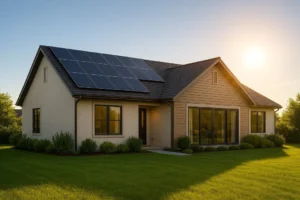
Ultimately, the goal isn’t to choose between morning and afternoon sun—it’s to capture as much of both as possible. For most homes in the Northern Hemisphere, a true south-facing roof is the ideal orientation because it receives balanced exposure throughout the entire day, capitalizing on both the cool efficiency of the morning and the powerful rays of the afternoon.
However, not every roof is perfectly south-facing. Here’s how orientation impacts the morning vs. afternoon question:
- East-Facing Panels: These panels will be superstars in the morning, generating a significant amount of power early in the day. Production will taper off more quickly in the afternoon.
- West-Facing Panels: These panels will have a slower start but will be powerhouses in the late afternoon, perfectly timed to offset peak energy usage.
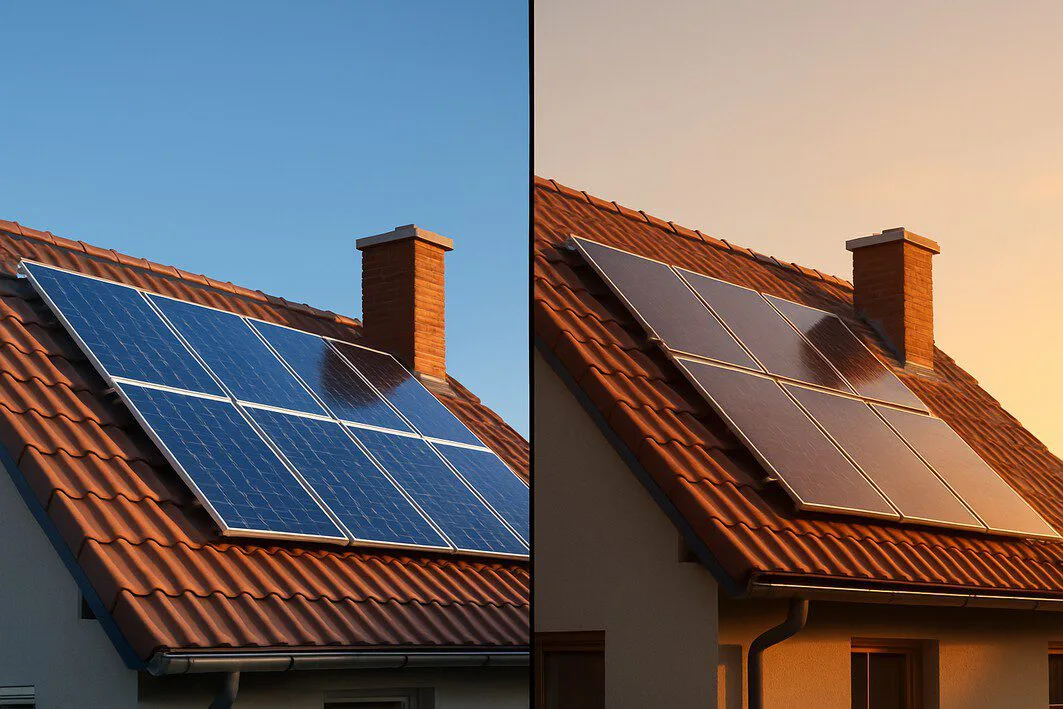
The best orientation for your home depends on your roof’s layout, local weather patterns, and your family’s energy consumption habits.
Maximizing Your Solar Panel Efficiency by Time of Day
Rather than worrying about a specific time, focus on optimizing your system for all-day performance. Here are three key strategies:
1. Ensure Optimal Panel Orientation and Tilt
The placement of your panels is the single most important factor in their lifetime performance. Getting the orientation and tilt angle right for your specific location and roof structure is crucial for maximizing sun exposure from dawn until dusk. This is determined during a professional solar panel installation, which includes a detailed site assessment to map out the most productive placement.
2. Consider Your Energy Usage Patterns
Think about when your household uses the most electricity. If you are an “early bird” family with high morning usage, an east-facing system might be beneficial. If your energy demand spikes in the afternoon, a west-facing system could be more valuable. Our RenewGenius ROI calculator can help you model these scenarios to better understand your potential savings.
3. Keep Panels Clean and Maintained
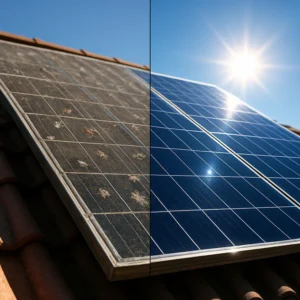
A simple layer of dust, pollen, or debris can block sunlight and reduce your system’s output. Regularly cleaning your panels ensures they are always ready to absorb the maximum amount of solar energy available at any time of day.
Making an Informed Decision with RenewGenius
So, is morning or afternoon sun better? The best answer is a full day of sun. By understanding the solar panel power generation curve and the factors that influence it, you can see that total daily sunlight exposure is what truly matters.
At RenewGenius, we focus on providing clear, actionable insights for residential solar solutions. We believe that by demystifying topics like this, we empower you to make an informed and confident decision. Your home, your roof, and your energy needs are unique, and the right solar solution will be tailored to you.