The dream of a home powered by clean, renewable energy is more attainable than ever. But for many homeowners, one question looms large: with the significant upfront investment, exactly how to pay for solar panels? The answer lies in the diverse world of solar financing options, a landscape designed to make solar energy accessible and affordable for nearly every budget.
Table of Contents
This comprehensive guide is your central resource for understanding solar panel financing. We’ll break down every available method, from loans and leases to government incentives, giving you the clarity needed to make a confident decision. At RenewGenius, our mission is to empower you with knowledge. As specialists focused on residential solar solutions, we’ve built a comprehensive solar knowledge base to help you navigate your journey to energy independence.
Why Consider Solar Panel Financing?
While paying for a solar system in cash offers the highest long-term return, it isn’t a feasible option for everyone. Financing bridges this gap, allowing you to start saving on your electricity bills immediately without draining your savings.
- Immediate Savings: Many financing options have monthly payments that are lower than your current average energy bill, generating savings from day one.
- Increased Home Value: Owned solar systems can significantly increase your property’s market value.
- Hedge Against Rising Utility Costs: Lock in your energy costs and protect yourself from the unpredictable and ever-increasing rates charged by utility companies.
- Achieve Energy Independence: Gain control over your power source and reduce your reliance on the grid.
Understanding Your Solar Financing Options: A Complete Breakdown
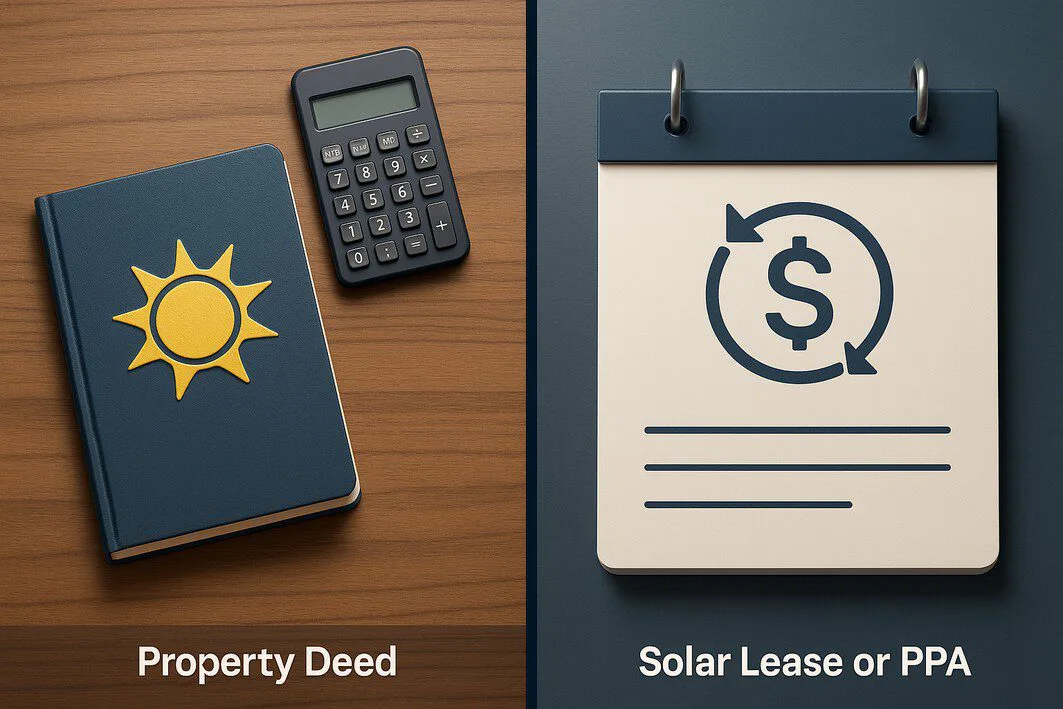
Choosing the right financing path is a critical step in your solar journey. Each method offers a different balance of ownership, upfront cost, and long-term responsibility.
Each path has unique benefits and considerations. To dive deeper into the specifics of loans, leases, and PPAs, explore our detailed guides on the various solar panel financing methods.
Solar Loans: The Path to Ownership
A solar loan is much like a home improvement or auto loan. You borrow money from a lender (like a bank, credit union, or specialized solar lender) to purchase your solar panel system outright. You then make regular monthly payments to repay the loan over a set term.
Pros:
- Full Ownership: You own the system from the moment it’s installed.
- Tax Credits & Incentives: As the system owner, you are eligible to claim valuable federal, state, and local incentives, including the Federal Solar Tax Credit.
- Maximum ROI: Ownership delivers the greatest long-term financial return.
Cons:
- Responsibility for Maintenance: You are responsible for any upkeep or repairs the system may need after the warranties expire.
- Requires Credit Approval: You will need to qualify for the loan based on your credit history and financial standing.
Solar Leases: Low Upfront Cost, No Ownership
With a solar lease, a third-party company (the solar provider) installs a solar system on your roof, but they retain ownership. In exchange, you pay a fixed monthly fee to “rent” the system and use the power it generates. These agreements typically last for 20-25 years.
Pros:
- Little to No Upfront Cost: Many leases require $0 down, removing the initial financial barrier.
- Maintenance Included: The solar provider owns the system, so they are responsible for all monitoring, maintenance, and repairs.
- Predictable Payments: You have a fixed monthly payment for the duration of the lease term.
Cons:
- No Ownership: You do not own the system and will not benefit from the increased home value.
- Ineligible for Incentives: The third-party owner claims all tax credits and rebates.
- Potential Escalators: Some lease contracts include an annual “escalator clause” that increases your monthly payment by a small percentage each year.
Power Purchase Agreements (PPAs): Paying for Power, Not Panels
A Power Purchase Agreement (PPA) is similar to a lease in that a third party installs and owns the system on your roof. The key difference is how you pay. Instead of a fixed monthly rent, you agree to purchase the energy the system produces at a set price per kilowatt-hour (kWh).
Pros:
- $0 Down Installation: Like a lease, PPAs typically have no upfront costs.
- Pay Only for Performance: You only pay for the energy the system actually generates. If it underproduces, your bill is lower.
- All Maintenance Covered: The PPA provider is responsible for system performance and handles all maintenance.
Cons:
- No Ownership or Incentives: You do not own the system and cannot claim any tax credits.
- Rate Escalators are Common: Most PPAs include an annual rate escalator, so your price per kWh will increase over time.
- Complex Contracts: PPA contracts can be more complex than lease agreements, requiring careful review.
Government Grants for Solar Systems and Other Incentives
One of the most powerful tools for reducing the cost of solar is the array of available incentives. The most significant is the Federal Solar Tax Credit, also known as the Investment Tax Credit (ITC), which allows you to deduct a substantial percentage of your system’s total cost from your federal taxes.
Beyond the federal credit, many states, municipalities, and even local utility companies offer their own incentives:
- State Tax Credits: Additional credits that reduce your state tax liability.
- Cash Rebates: Upfront rebates that directly lower the initial purchase price.
- Solar Renewable Energy Certificates (SRECs): A performance-based incentive where you can earn and sell certificates for the clean energy your system produces.
Understanding how these government grants for solar systems and other incentives apply to you is crucial for calculating your true cost and return on investment.
How to Choose the Right Financing Option for You
The best choice depends entirely on your personal financial situation and goals.
- Choose a Solar Loan if: You want to maximize your financial return, take advantage of tax credits, and increase your home’s value.
- Choose a Solar Lease or PPA if: Your primary goal is to lower your monthly electricity bill with little to no upfront investment and you prefer not to be responsible for maintenance.
- Choose to Pay with Cash if: You have the available capital and want the simplest transaction with the highest possible ROI and no monthly payments.
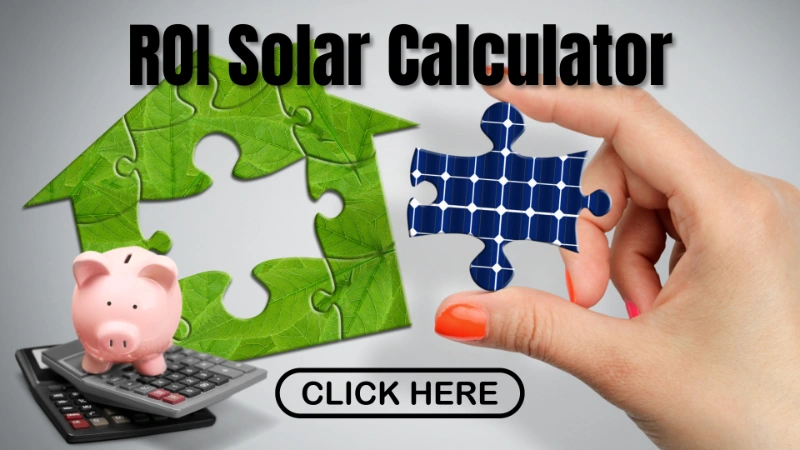
Making an informed decision requires running the numbers. At RenewGenius, we believe in empowering homeowners with data. Our powerful ROI calculator is designed to help you model different scenarios, factoring in system costs, energy savings, and incentives to see which of the solar financing options delivers the best return for your specific situation.
The Future of Solar Financing in 2026 and Beyond
As technology improves and solar adoption grows, the financing landscape continues to evolve. We anticipate seeing even more competitive loan products, innovative financing models, and continued government support to encourage the transition to clean energy. Staying informed is your best strategy, and RenewGenius is committed to being your trusted resource every step of the way. Ready to take the next step? Explore our guides, use our tools, and discover how solar can power your future.