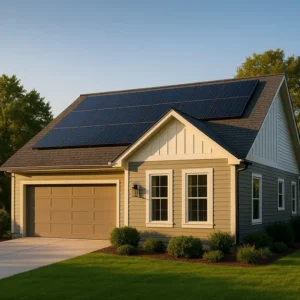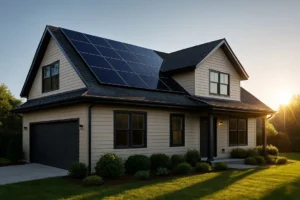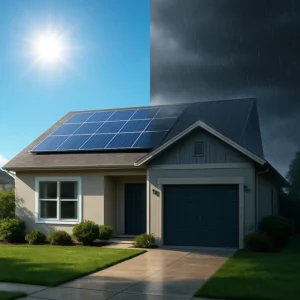
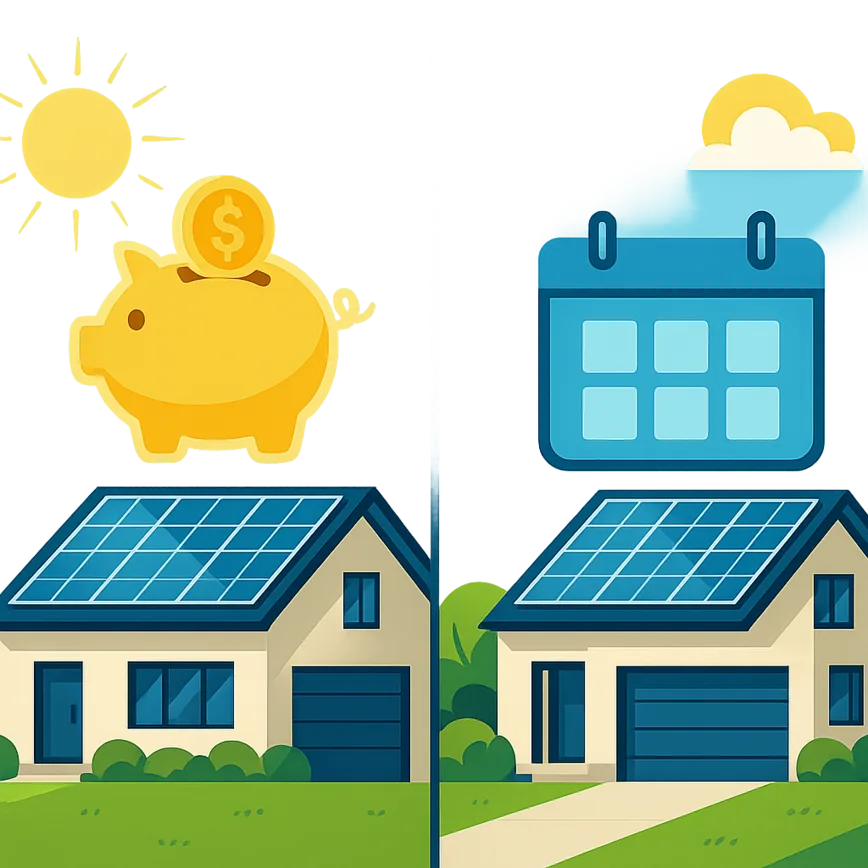
Going solar is one of the most impactful upgrades you can make to your home, promising lower energy bills and a smaller carbon footprint. But the initial investment can seem daunting. The good news is, you don’t have to pay for it all at once. The big question then becomes: what’s the best way to pay for it? When it comes to the solar loan vs solar lease debate, homeowners often find themselves at a crossroads.
Table of Contents
- What Are the Main Ways to Finance Solar Panels?
- Understanding Solar Loans: Owning Your Power
- Understanding Solar Leases: Renting Your Power
- Solar Loan vs. Solar Lease: A Head-to-Head Comparison
- So, Is It Worth Getting a Loan for Solar?
- Making the Right Choice for Your Home
- Conclusion: Your Path to Solar Savings
Understanding the financial side of solar is just as important as understanding the technology. As a comprehensive solar knowledge base, we’re here to break down the two most common financing paths. This guide will help you understand the core differences between loans and leases so you can make a confident decision for your home and your wallet.
What Are the Main Ways to Finance Solar Panels?
Before diving deep into loans and leases, it’s helpful to know the full landscape. There are generally four ways to pay for a residential solar system:
- Cash Purchase: Paying upfront for the entire system. This offers the highest return on investment but requires significant capital.
- Solar Loan: Borrowing money to purchase the system, which you then own.
- Solar Lease: Paying a fixed monthly fee to “rent” a solar panel system owned by a third party.
- Power Purchase Agreement (PPA): Similar to a lease, but instead of a fixed rent, you agree to buy the power generated by the system at a set price per kilowatt-hour (kWh).
For most homeowners, the choice comes down to a solar loan or a solar lease. Let’s compare them directly.
Understanding Solar Loans: Owning Your Power
A solar loan works just like any other home improvement loan. You borrow a set amount of money from a lender (like a bank, credit union, or specialized solar financer) to purchase your solar panel system outright. You then make regular monthly payments to pay back the loan over a predetermined term.
Pros of a Solar Loan
- You Own the System: From day one, the solar panels are your property. This means they can increase the value of your home.
- Claim All Financial Incentives: As the system owner, you are eligible for lucrative incentives like the federal Residential Clean Energy Credit, which can significantly reduce the net cost of your system.
- Maximize Long-Term Savings: Once your loan is paid off, the electricity your panels produce is essentially free. This leads to the greatest possible savings over the 25+ year lifespan of the system.
- Full Control: You decide the size, brand, and type of equipment used in your system.
Cons of a Solar Loan
- You Are Responsible for Maintenance: As the owner, you are responsible for any maintenance or repairs needed after the initial workmanship and manufacturer warranties expire.
- Requires a Credit Check: You will need to qualify for the loan based on your credit score and financial history.
- Monthly Payments: You are committed to a monthly loan payment, regardless of how much energy your system produces.
Understanding Solar Leases: Renting Your Power
When leasing solar panels, you aren’t buying anything. Instead, a solar company installs its own panels on your roof, and you pay them a fixed monthly fee to use the electricity they generate. The solar company retains ownership of the equipment for the entire lease term, which is typically 20-25 years.
Pros of a Solar Lease
- Low or No Upfront Cost: This is the biggest draw for leases. You can go solar with little to no money down, making it highly accessible.
- Hassle-Free Maintenance: The leasing company owns the system, so they are responsible for all monitoring, maintenance, and repairs.
- Predictable Energy Costs: Your monthly lease payment is typically fixed, protecting you from the volatile and rising costs of utility electricity.
Cons of a Solar Lease
- You Don’t Own the System: The panels are not your asset and generally won’t increase your home’s value.
- No Tax Credits or Incentives: The leasing company, as the owner, claims all federal, state, and local incentives.
- Lower Overall Savings: While you will save money compared to your utility bill, your total savings will be significantly less than if you owned the system.
- Potential Complications When Selling Your Home: If you sell your home, the new buyer must agree to assume the solar lease, which can sometimes complicate the sales process.
Solar Loan vs. Solar Lease: A Head-to-Head Comparison
| Feature | Solar Loan | Solar Lease |
|---|---|---|
| Ownership | You own the system | The solar company owns the system |
| Upfront Cost | Can be $0 down, but there’s a loan | Typically $0 down |
| Maintenance | Your responsibility | The leasing company’s responsibility |
| Tax Credits | You receive them | The leasing company receives them |
| Long-Term Savings | Highest potential ROI | Moderate savings |
| Home Value | Can increase home value | Does not increase home value |
So, Is It Worth Getting a Loan for Solar?
For most homeowners who can qualify, the answer is a resounding yes. Is it worth getting a loan for solar? If your primary goal is to maximize your financial return and build equity in your home, a loan is the superior option. By owning the system, you capture the full financial benefits, including tax credits and the total value of the energy produced over decades.
The key is to ensure the numbers work for your specific situation. Using an ROI calculator can provide clarity, showing you a projection of your long-term savings after accounting for loan payments. This data-driven approach removes the guesswork. A loan transforms a monthly utility expense into an investment in an energy-producing asset.
Making the Right Choice for Your Home
Choosing between a loan and a lease ultimately depends on your personal financial situation and goals.
- Choose a Solar Loan if: You want to maximize your long-term savings, take advantage of tax credits, and increase your home’s value.
- Choose a Solar Lease if: Your top priority is going solar with zero upfront cost and you want to avoid any responsibility for system maintenance.
At RenewGenius, our focus is on providing residential solar solutions and the knowledge you need to choose the right one. Understanding the financial aspect is a critical step in that journey. To explore loans, leases, and other methods like Power Purchase Agreements in greater detail, our guide to solar panel financing options provides a complete overview.
Conclusion: Your Path to Solar Savings
Whether you choose a loan or a lease, you are taking a powerful step toward energy independence and a more sustainable future. The solar loan vs solar lease decision isn’t about which one is “good” or “bad,” but which one is the right fit for you. By weighing the benefits of ownership against the convenience of a no-maintenance rental, you can confidently select the financing path that aligns with your goals and unlocks years of solar savings.