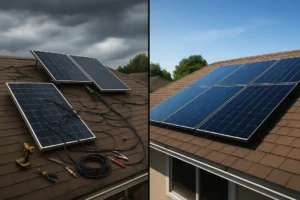
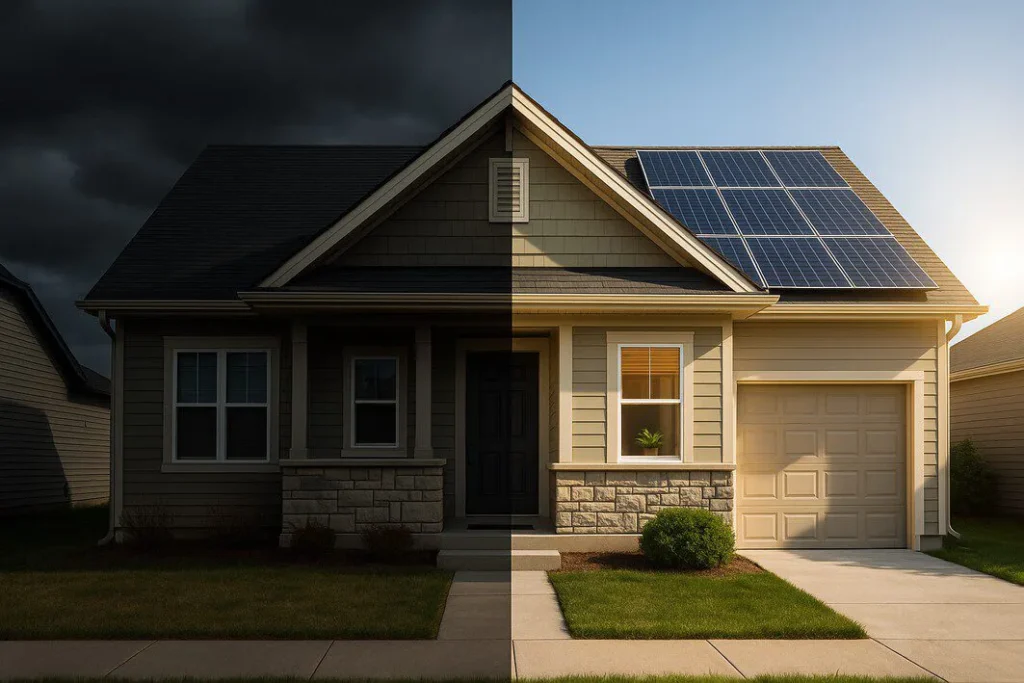
It’s the number one question on every homeowner’s mind when considering solar: “How much money do you actually save with solar panels?” You’ve heard the promises of drastically lower energy bills and long-term financial freedom, but you want to see the numbers. You want a real breakdown, not just vague estimates.
Table of Contents
- Understanding Your Current Electric Bill
- How Solar Panels Reduce Your Electric Bill
- Key Factors That Determine Your Solar Savings
- The Power of Net Metering: Maximizing Your Savings
- A Sample Bill Breakdown: Before and After Solar
- Beyond the Bill: Long-Term Financial Benefits
- Calculate Your Personal Savings with Confidence
While the exact dollar amount varies from home to home, the savings are real, tangible, and significant. This guide will break down how solar panels impact your monthly expenses, what factors determine your savings, and what a “post-solar” utility bill can look like. As a comprehensive knowledge base focused on residential solar solutions, we’re here to give you the clarity you need to make a confident decision.
Understanding Your Current Electric Bill
Before you can appreciate the savings, you need to understand what you’re currently paying for. Grab a recent utility bill. You’ll likely see a few key components:
- Energy Charge (kWh): This is the bulk of your bill, based on the amount of electricity you consumed from the grid, measured in kilowatt-hours (kWh).
- Transmission/Delivery Fees: These are charges from the utility company for the service of delivering electricity to your home and maintaining the grid.
- Taxes and Surcharges: Various local and state taxes or fees added to your total.
Your total bill is the sum of these costs. This is the figure that solar power is poised to slash.
How Solar Panels Reduce Your Electric Bill
So, how much does solar reduce your electric bill? For many homeowners, the answer is: almost entirely.
When you install a residential solar system, you become your own power producer. During the day, the solar panels on your roof generate electricity that directly powers your home’s appliances, lights, and electronics.
Because you are using your own clean energy first, you are importing significantly less—or even zero—electricity from the utility grid. This directly reduces or eliminates the “Energy Charge” on your bill. You’ll often only be left with minimal fixed charges for being connected to the grid, which can be as low as $10-$20 per month.
Key Factors That Determine Your Solar Savings
Your exact savings depend on a unique set of variables. Understanding these factors is the first step toward getting an accurate picture of your financial future with solar.
Your Home’s Energy Consumption
The more electricity you currently use, the more you stand to save. A large family home with high-draw appliances like a pool pump, EV charger, and central air conditioning will see a more dramatic reduction in costs than a small, energy-efficient condo.
The Size and Efficiency of Your Solar System
A larger system with more panels will generate more electricity, offsetting a greater portion of your energy usage. The efficiency of the panels also plays a role; higher-efficiency panels can produce more power in a smaller amount of space.
Your Geographic Location & Sunlight Exposure
It’s no secret that a home in sunny Arizona will generate more solar power than one in overcast Seattle. The amount of direct, unobstructed sunlight your roof receives each day—known as “peak sun hours”—is a primary driver of energy production and, therefore, savings.
Local Utility Rates
The higher your electricity rates, the more valuable each kilowatt-hour your solar panels produce becomes. If you live in an area with expensive energy, your return on investment will be faster and your monthly savings will be greater.
The Power of Net Metering: Maximizing Your Savings
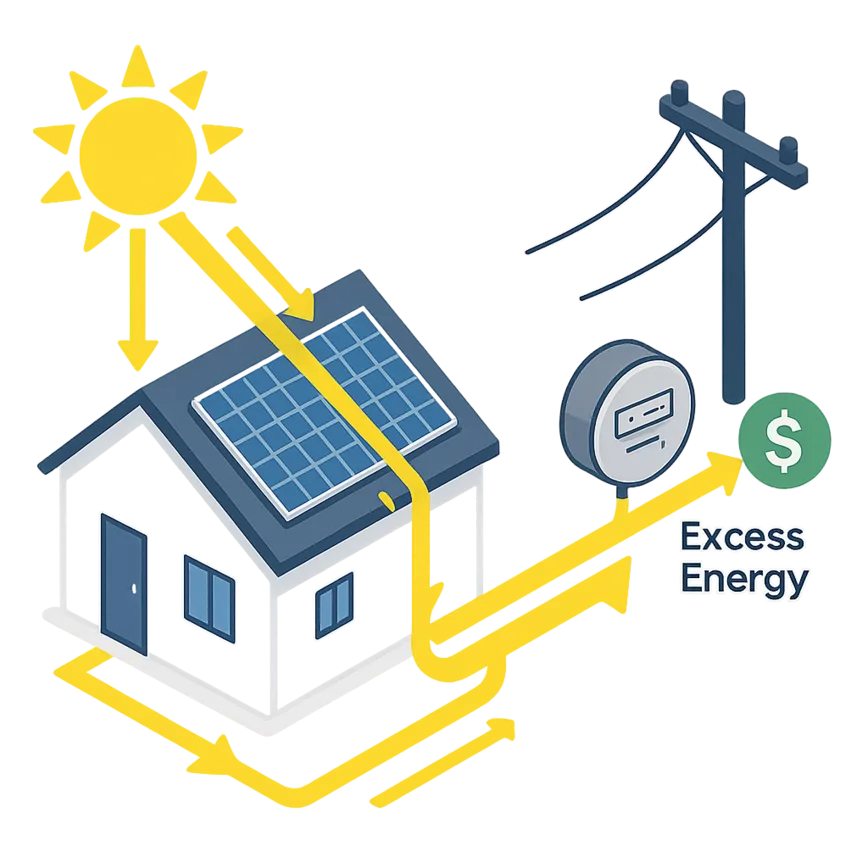
What happens when your panels produce more electricity than your home is using, like on a bright, sunny afternoon? That excess energy isn’t wasted. Thanks to a policy called net metering, it’s sent back to the utility grid.
Your utility company credits you for this exported power. This is where the most significant net metering cost savings come from. These credits are applied to your bill, offsetting the cost of any electricity you might need to draw from the grid at night or on cloudy days. In many cases, you can build up enough credits during the summer to cover your winter bills, a concept known as “virtual energy storage.”
A Sample Bill Breakdown: Before and After Solar
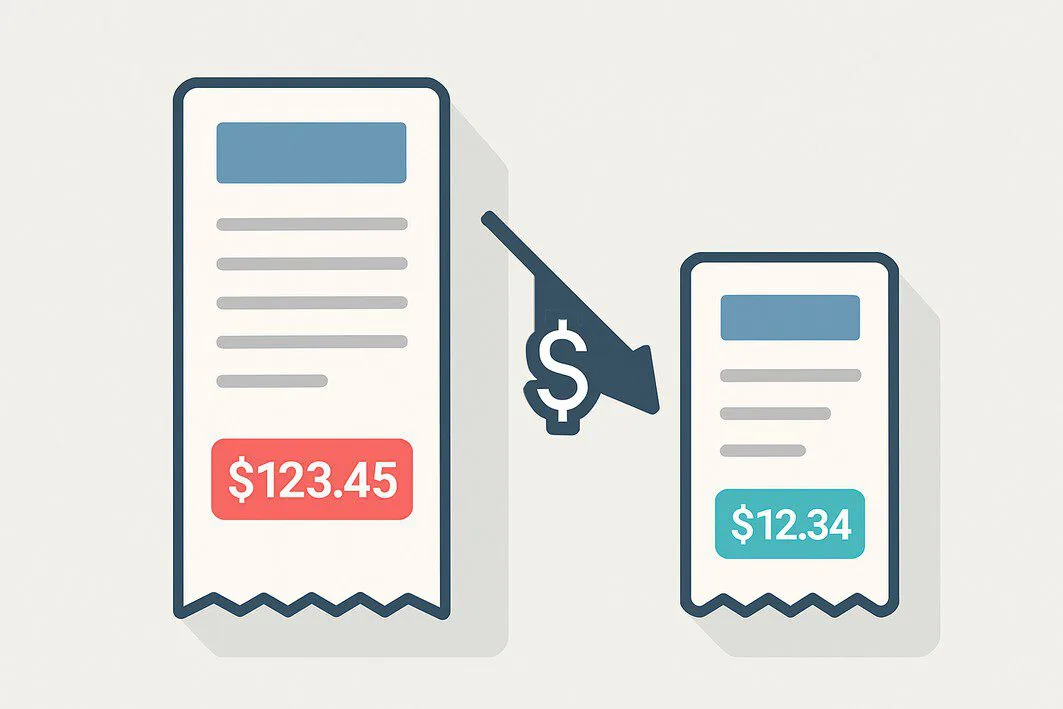
Let’s make this tangible with a hypothetical example for a typical family home.
BEFORE SOLAR:
- Energy Usage from Grid: 950 kWh
- Rate: $0.22/kWh
- Energy Charge: 950 kWh x $0.22 = $209.00
- Delivery Fees & Taxes: $25.00
- Total Monthly Bill: $234.00
AFTER SOLAR:
Your new solar system generates 900 kWh during the month.
- Energy Usage from Grid (at night): 150 kWh
- Excess Solar Sent to Grid (during the day): 100 kWh
- Net Metering Credit: 100 kWh x $0.22 = -$22.00
- Energy Charge: 150 kWh x $0.22 = $33.00
- Delivery Fees & Taxes: $15.00
- New Total: $33.00 (Energy) + $15.00 (Fees) – $22.00 (Credit) = $26.00
In this scenario, the monthly savings are over $200. This is a powerful demonstration of how solar transforms a major monthly expense into a minor, manageable fee.
Beyond the Bill: Long-Term Financial Benefits
The immediate reduction in your monthly bill is just the beginning. A solar investment protects you from unpredictable utility rate hikes and locks in your energy costs for decades. The financial advantages are just one piece of the puzzle. To explore the full spectrum of solar energy benefits, from environmental impacts to increased home value, our detailed guide can provide a complete picture.
Calculate Your Personal Savings with Confidence
As you can see, the answer to “how much money do you save with solar panels?” is deeply personal. It depends on your home, your habits, and your location.
The best way to get a precise answer is to analyze your specific situation. To move from a general understanding to a concrete financial forecast, the next logical step is to use a data-driven tool. We encourage you to use the RenewGenius ROI calculator to input your details and receive a personalized savings estimate. It’s designed to give homeowners like you the clear, actionable insights needed to make a smart investment in your energy future.