Making the switch to solar energy is one of the smartest investments you can make for your home, your wallet, and the planet. But the upfront cost of a solar panel system can feel like a significant hurdle. That’s where solar financing options come in. This guide is designed to demystify solar panel financing, providing you with the clear, comprehensive information you need to choose the best path forward.
Table of Contents
Whether you’re looking to own your system outright or want a solution with zero down payment, understanding the available solar financing options for homeowners is the first step toward energy independence. Let’s explore how you can make solar a reality for your home without breaking the bank.
Why Consider Solar Financing in the First Place?
While paying for a solar system in cash offers the quickest return on investment, it’s not a feasible option for most homeowners. Solar financing bridges this gap, making clean energy accessible and affordable.
By financing your system, you can often start saving money from day one. In many cases, your new monthly loan or lease payment is lower than your old electricity bill, creating immediate positive cash flow. Financing allows you to lock in your energy costs for years to come and begin building equity in an asset that increases your home’s value.
The Main Types of Solar Financing Options
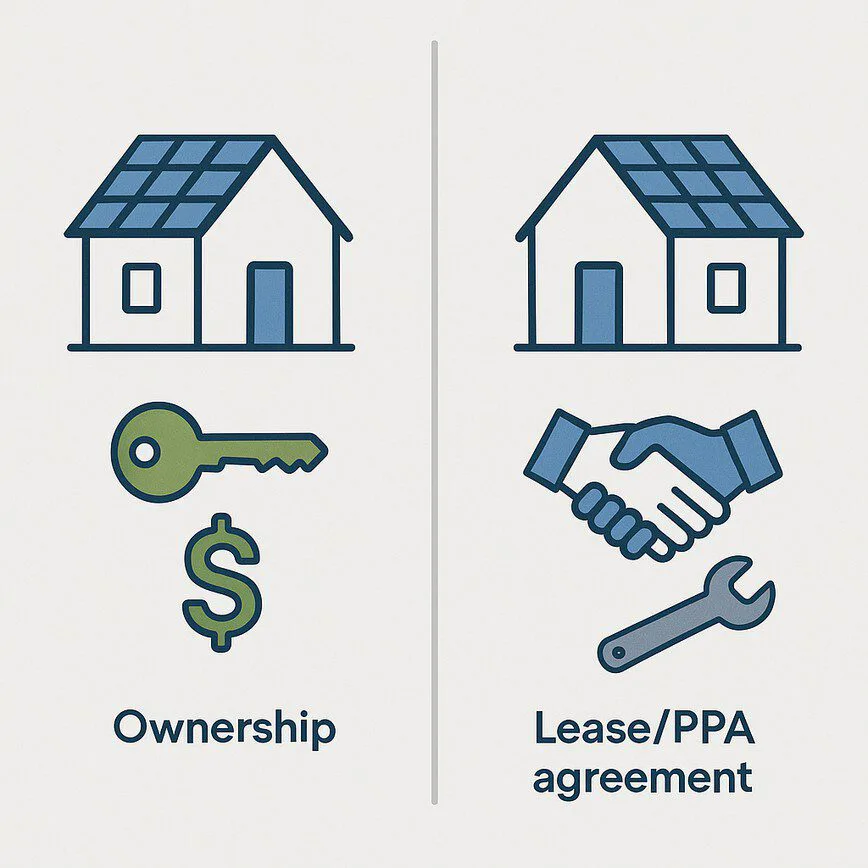
Navigating the world of solar financing can seem complex, but it generally boils down to four main pathways. Each has distinct advantages and considerations based on your financial goals.
Solar Loans: Owning Your System Outright
A solar loan is similar to a car loan or home improvement loan. You borrow money from a lender to purchase your solar panel system and pay it back, with interest, over a set term. Once the loan is paid off, you own the system free and clear.
Pros:
- Full Ownership: You own the system from day one.
- Tax Credits & Incentives: As the system owner, you are eligible to claim valuable federal, state, and local tax incentives, like the Federal Solar Tax Credit.
- Increased Home Value: A purchased solar system is a proven asset that can significantly increase your property’s resale value.
- Maximum ROI: Ownership delivers the greatest long-term financial returns.
Cons:
- Responsibility for Maintenance: You are responsible for any maintenance or repairs after the installer’s warranty period ends.
- Requires Credit Approval: You will need a good credit score to qualify for favorable interest rates.
Solar Leases: Paying for Power, Not Panels
With a solar lease, a third-party company (the solar provider) installs a solar panel system on your roof, but they retain ownership. In return, you pay a fixed monthly “rent” to use the system and the energy it produces. These agreements typically last for 20-25 years.
Pros:
- Little to No Upfront Cost: Most solar leases require $0 down, making them highly accessible.
- Maintenance Included: The solar provider owns the system, so they are responsible for all monitoring, maintenance, and repairs.
- Predictable Payments: You have a fixed monthly payment for the life of the lease, protecting you from utility rate hikes.
Cons:
- No Ownership: You do not own the system and won’t benefit from the increased home value.
- Ineligible for Incentives: The system owner (the leasing company) claims all tax credits and rebates.
- Potential Escalators: Some leases include an “escalator clause,” where your monthly payment increases by a small percentage each year.
Power Purchase Agreements (PPAs): A Performance-Based Approach
A Power Purchase Agreement, or PPA, is very similar to a lease. A developer installs and owns a solar system on your property, and you agree to purchase the energy it produces at a set price per kilowatt-hour (kWh).
The key difference from a lease is that you pay for the actual electricity generated, not a flat monthly fee. If the system produces less power in a given month, your bill will be lower.
Pros:
- No Upfront Cost: Like a lease, PPAs typically require no initial investment.
- Pay for Performance: You only pay for the electricity the system actually generates.
- Maintenance is Covered: The PPA provider is responsible for all system upkeep.
Cons:
- No Ownership or Incentives: You do not own the system and cannot claim any tax credits.
- Variable Payments: Your monthly bill will fluctuate with the sun, making it less predictable than a lease.
- Rate Escalators: PPAs also often include rate escalators, so the price you pay per kWh may rise over time.
Paying with Cash: The Direct Route
The simplest and most direct of all solar financing options is to pay with cash. If you have the capital available, purchasing your system outright eliminates monthly payments and interest charges, putting you on the fastest path to a full return on your investment.
Pros:
- Maximum Savings: You achieve the highest possible ROI and lifetime savings.
- No Debt or Interest: You own the system immediately with no strings attached.
- Full Incentive Benefits: You are eligible for all available tax credits and rebates.
Cons:
- High Upfront Cost: Requires a significant initial capital outlay.
- Ties Up Capital: The money used could potentially be invested elsewhere.
How to Choose the Right Solar Financing Option for Your Home
The best choice depends entirely on your personal financial situation and energy goals. As one of the leading solar financing guides, we recommend you consider these factors:
- Assess Your Financial Situation: Are you looking to maximize your long-term investment and have a good credit score? A solar loan is likely your best bet. If your primary goal is to lower your electricity bill immediately with zero upfront cost, a lease or PPA might be more suitable.
- Understand Your Energy Goals: Do you want to own an asset that increases your home’s value and allows you to claim tax credits? Ownership through a loan or cash purchase is the only way. If you prefer a hands-off approach where a company handles all maintenance, a lease or PPA provides peace of mind.
- Compare Quotes and Terms: Never settle for the first offer. Get quotes for different financing options from multiple reputable installers. Pay close attention to interest rates, term lengths, and any escalator clauses to ensure you’re getting the best possible deal.
Making an Informed Decision with RenewGenius
Choosing how to pay for your solar journey is a big decision, but you don’t have to make it alone. At RenewGenius, our entire mission is to empower homeowners with clear, actionable information. Our comprehensive solar knowledge base is built specifically to guide you through every step of your journey, from initial research to final installation.
Because we focus exclusively on residential solar solutions, all of our advice is tailored to the unique needs of homeowners like you. We strongly recommend using a tool like our free ROI calculator to compare how different financing options will impact your long-term savings. By inputting your current energy usage and considering the terms of a loan versus a lease, you can see a clear projection of your financial future with solar. To get started, explore our comprehensive solar panel financing resources and see how accessible solar can be.

Your Path to Clean Energy Starts Today
Ultimately, the best solar panel financing option is the one that aligns with your budget and goals. Whether it’s the long-term investment of a loan or the immediate, no-cost savings of a lease, financing makes solar power an attainable reality for millions of Americans.
By doing your research and using the right tools, you can confidently choose a path that will lower your carbon footprint, reduce your reliance on the grid, and save you money for decades to come.