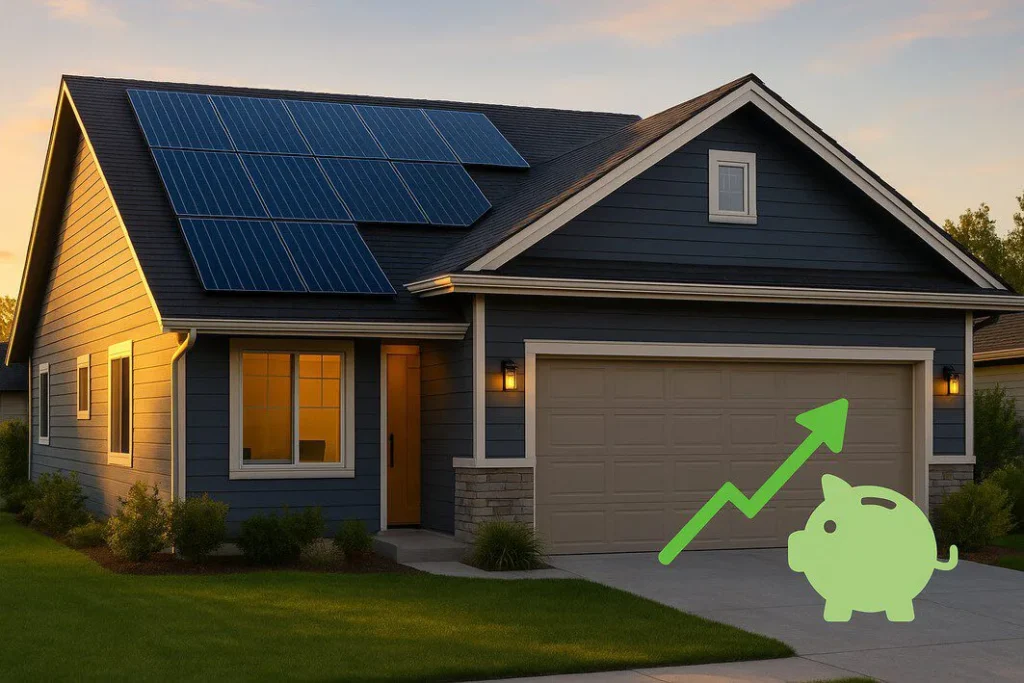
Making the switch to solar energy is one of the most significant home upgrades you can consider. It promises a cleaner footprint, energy independence, and, most importantly, substantial long-term financial returns. But the first question on every homeowner’s mind is a practical one: how much do solar panels cost? This guide is designed to give you a clear, comprehensive answer.
Table of Contents
- How Much Do Solar Panels Cost? A 2025 Breakdown
- Understanding What’s Included in Your Solar Panel Installation Cost
- Solar Panel Cost vs Savings: Calculating Your Return on Investment (ROI)
- Is Solar Worth It? Making an Informed Decision
li style=”margin-bottom: 5px;”>Maximizing Your Solar Energy Cost Savings
We’ll break down every aspect of solar panel pricing, from the initial investment to the incredible potential for solar energy cost savings. At RenewGenius, we believe in empowering homeowners with a comprehensive solar knowledge base so you can make your decision with total confidence. Let’s dive into the numbers and uncover the true value of going solar in 2025.
How Much Do Solar Panels Cost? A 2025 Breakdown
The solar panel installation cost isn’t a one-size-fits-all figure. It varies based on your home’s energy needs, location, and the specific equipment you choose. However, we can look at national averages to get a strong starting point. In 2025, the average cost of a residential solar system in the U.S. typically ranges from $15,000 to $25,000 before any tax credits or incentives are applied.
Average Solar Panel Installation Cost by System Size
The primary driver of cost is the size of the system, measured in kilowatts (kW). A larger home with higher electricity consumption will require a larger system.
- Small System (4kW – 6kW): Often costs between $12,000 – $18,000. Ideal for smaller homes with moderate energy usage.
- Medium System (7kW – 9kW): Typically ranges from $21,000 – $27,000. This is the most common size for average American homes.
- Large System (10kW+): Can cost $30,000 or more. Suited for large residences, homes with electric vehicles, or those with very high energy consumption.
Key Factors Influencing Your Total Cost
Beyond system size, several other factors will influence your final quote:
- Panel Quality & Type: High-efficiency monocrystalline panels cost more upfront than polycrystalline panels but generate more power in less space.
- Roof Complexity: A simple, south-facing roof is ideal. Complex rooflines, steep pitches, or older roofs requiring repairs will increase labor costs.
- Inverter Type: String inverters are the standard, budget-friendly option, while microinverters or power optimizers offer better performance (especially on partially shaded roofs) at a higher price.
- Labor & Permitting: These “soft costs” vary significantly by region and the installer you choose.
- Location: Your state and local municipality can impact costs through permitting fees and available incentives.
Understanding What’s Included in Your Solar Panel Installation Cost
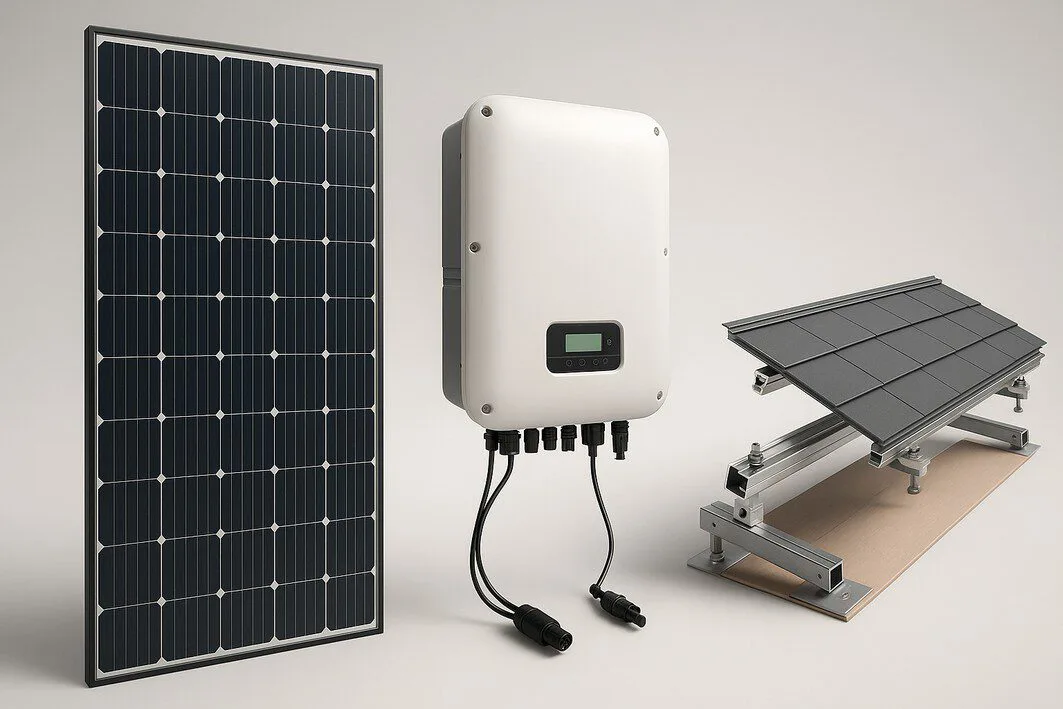
A reputable solar quote should be transparent, breaking down exactly what you’re paying for. As a company focused on residential solar solutions, we know that clarity is key. Here’s what’s typically included:
Hardware: Panels, Inverters, and Racking
This is the core equipment. It includes the solar panels themselves, the inverter(s) that convert DC power to usable AC power for your home, and the mounting system (racking) that securely attaches the panels to your roof.
Soft Costs: Permits, Labor, and Design
Often making up nearly half the total price, soft costs are just as important as the hardware. This category covers:
- System design and engineering
- Local government permits
- Installation labor
- Connecting your system to the utility grid
Optional Add-ons: Battery Storage and Monitoring Systems
Want to store excess energy for use during a power outage or at night? A solar battery like a Tesla Powerwall or LG Chem RESU is a popular add-on, though it will significantly increase the initial cost. Most systems also come with a monitoring app that allows you to track your energy production in real-time.
Solar Panel Cost vs Savings: Calculating Your Return on Investment (ROI)
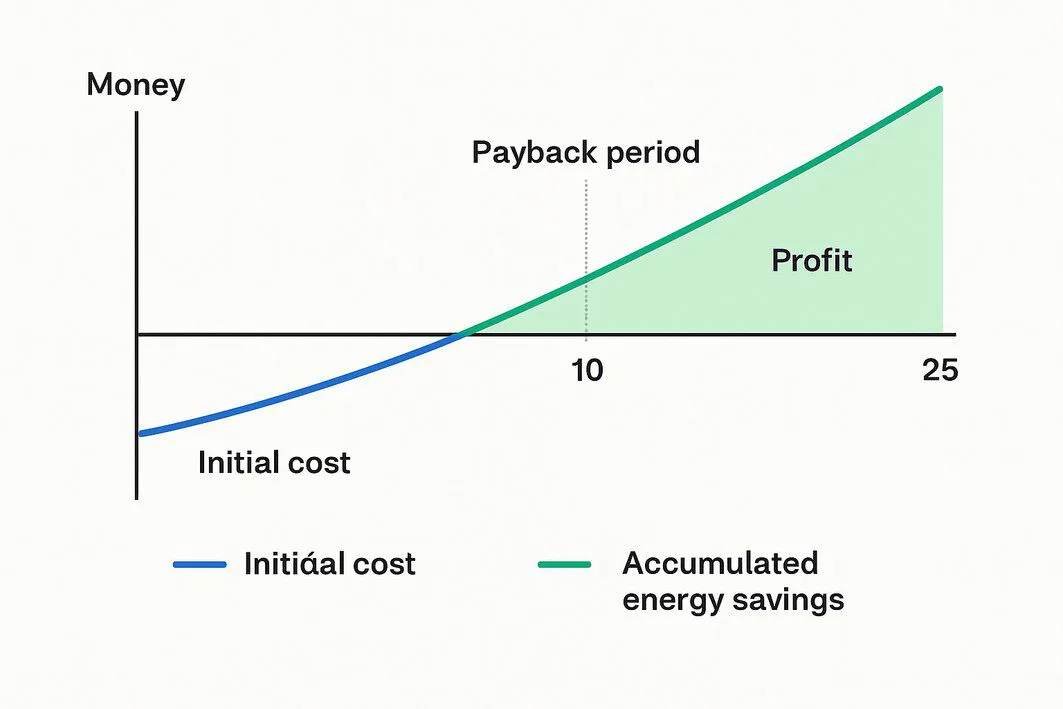
This is where the investment truly shines. The conversation about solar panel cost vs savings is central to understanding its value. While there’s an upfront cost, the savings begin the moment your system is activated.
Immediate Savings: Lowering Your Monthly Electricity Bill
Your solar panels will generate electricity to power your home during the day, drastically reducing the amount of energy you need to buy from your utility company. For many homeowners, this translates into hundreds of dollars in savings each month.
Long-Term Financial Gains: The Solar Payback Period
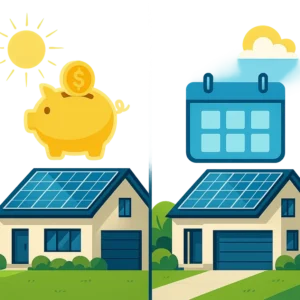
The “solar payback period” is the time it takes for your accumulated energy savings to equal your initial investment. On average, homeowners in the U.S. see a payback period of 8 to 12 years. After that point, the energy your system produces is essentially free profit for the remainder of its 25-30 year lifespan.
Using an ROI Calculator for a Personalized Estimate
Generic estimates are helpful, but your savings depend on your specific utility rate, energy usage, and system cost. To get a precise understanding of your potential return, it’s crucial to use a dedicated tool. RenewGenius offers a powerful ROI calculator to translate abstract estimates into real, personalized numbers for your home.
Maximizing Your Solar Energy Cost Savings
To shorten your payback period and boost your ROI, you must take full advantage of available financial incentives. These programs are designed to make solar more affordable for everyone.
Federal Solar Tax Credit (ITC)
The most significant incentive is the federal Residential Clean Energy Credit, often called the ITC. It allows you to deduct 30% of your total solar installation cost directly from your federal taxes. For a $20,000 system, that’s a $6,000 credit, bringing your net cost down to just $14,000.
State & Local Rebates and Incentives
Many states, local governments, and even utility companies offer their own rebates, tax credits, or performance-based incentives. These vary widely, so it’s essential to research what’s available in your specific area.
Net Metering: Earning Credits for Excess Energy
Net metering is a billing arrangement where your utility company gives you credits for any excess electricity your solar panels send back to the grid. On sunny days when you produce more power than you use, you’re essentially “selling” it back, and you can draw on those credits at night or on cloudy days. This is a key mechanism for maximizing your savings. By taking advantage of these programs, you can explore the many financial and environmental benefits of solar energy and see your investment pay off even faster.
Is Solar Worth It? Making an Informed Decision
When you weigh the initial solar panel cost vs savings over the long term, the answer for most homeowners is a resounding yes. The combination of the following factors makes solar a financially sound investment:
- Drastically reduced or eliminated electricity bills
- Powerful tax incentives and rebates
- A rising home value
The key is to work with a partner who can provide clear, accurate information tailored to your home. By focusing on residential solar solutions and providing a comprehensive solar knowledge base, we aim to give you the tools and insights needed to make a choice that benefits your wallet and the planet for decades to come.